

Monday, December 08, 2025
Pulsed Hydrogen Injection into the Blast Furnace Shaft (H2II)
The second H2II project meeting was held at thyssenkrupp Steel Europe in Duisburg, paving the way for further development & ultimately, successful integration of pulsed hydrogen shaft injection into an operational blast furnace (BF).
A major milestone has been reached with the design & manufacture of the world’s first pulse injection unit capable of 100% hydrogen injection, created by thyssenkrupp AT.PRO tec and Primetals Technologies. Participants had the opportunity to visit this unit & observe a test pulse demonstration.
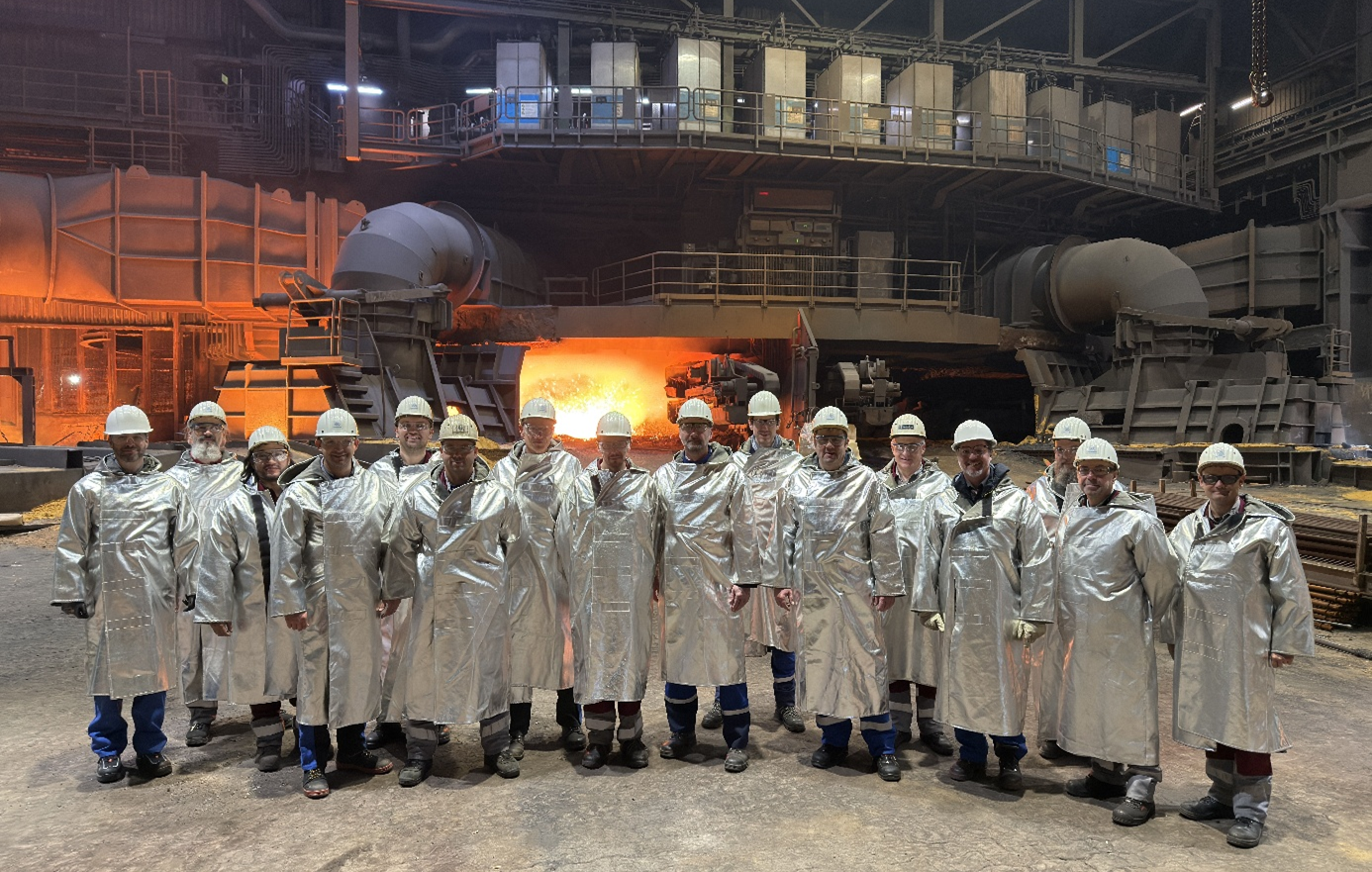
thyssenkrupp Steel Europe was a gracious host and arranged a visit to the Schwelgern BF1 casthouse in Duisburg, where the technical foundation of H2II - the oxygen pulsing SIP process - is already applied.
The H2II project, partially funded by the EU and coordinated by BFI, supports the steel industry’s efforts to reduce the carbon footprint of ironmaking. The consortium includes voestalpine Stahl GmbH, thyssenkrupp Steel Europe, thyssenkrupp AT.PRO tec, Primetals Technologies, and K1MET. Hydrogen use will be a cornerstone of the steel industry’s transformation toward carbon neutrality. In the long term, the main technical solution for decarbonization may involve replacing efficient but CO₂-intensive blast furnaces with direct reduction plants using hydrogen. However, due to global economic constraints and limited availability of green electricity, hydrogen, and high-grade ores, blast furnaces will likely remain in operation beyond 2040. Consequently, technologies that reduce the carbon footprint of BF ironmaking are essential. Hydrogen injection is widely discussed as a means to lower CO₂ emissions from blast furnaces, and pulsed injection is expected to improve hydrogen utilization efficiency - potentially extending to direct reduction furnaces in later stages.
Hydrogen injection at tuyere level has already been successfully tested but has some drawbacks. For example, the Hydrogen competes with pulverised coal for available Oxygen and resulting flame temperatures are high, resulting in higher heat loads near the tuyere tip. It is believed that injecting Hydrogen at shaft level has the potential to mitigate such effects and could even lead to higher gas utilisation rates. Based on these considerations, a consortium of research and industry partners has been funded by the European Commission to evaluate and demonstrate the potential of sequence impulse injection of Hydrogen into the BF shaft.
The H2II project is funded by the European Union (Grant No. 101157157). Views and opinions expressed are however those of the author(s) only and do not necessarily reflect those of the European Union or the European Research Executive Agency. Neither the European Union nor the granting authority can be held responsible for them.

Further information about the project: H2II