


DroMoSPlan – Drones for autonomous Monitoring of Steel Plants
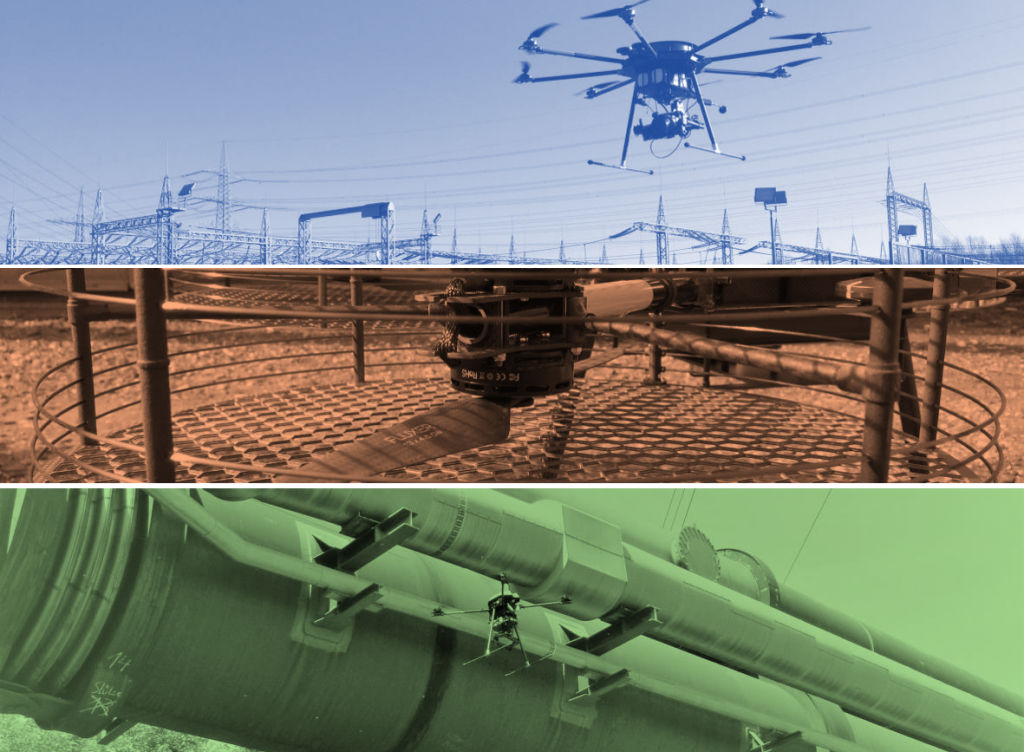
Baseline situation
- Drone technology is increasingly being used for civilian purposes and further developed in these areas.
- For a successful transfer to the steel industry, technical, economic, legal and social framework conditions have to be examined.
- Algorithms for autonomous and intelligent flying are needed to increase safety in confined and complex industrial environments.
- In order to make drones a reliable tool for industry, a more robust design, the use of durable and resistant components and automatic charging stations must be developed.
Project goals
- Improvement of robustness and operational safety compared to conventional drones
- Use of automatic charging stations in steel works
- Increased occupational safety through the use of drones in complex and endangered areas
- Reduction of maintenance and repair costs
- Development of algorithms for autonomous flying
- Provision of innovative user interfaces (e.g. smartphone apps)
- Development of a training concept for the operational use of drones
- Investigation and consideration of social and operational aspects
Work stages
- Research all legal and operational framework conditions for the use of drones in the steel industry
- Initiate employee surveys and evaluate the acceptance and social aspects of modern drone technology at the workplace.
- Design and deploy industrial droning platforms
- Design hardware concepts for autonomous flying
- Design and implement communication interfaces and algorithms
- Carry out and validate test campaigns in the steelworks
Usefulness
- Cost reduction in the areas of maintenance, monitoring and logistics
- New inspection possibilities for many different operating ranges
- Enhancing the competitiveness of the European steel industry
- Increased occupational safety through the use of drones in hazardous areas
https://www.youtube.com/channel/UCjL_zSHhnzm0IeFP3u8M2jQ
This project is funded by the European Union. Views and opinions expressed are however those of the author(s) only and do not necessarily reflect those of the European Union. Neither the European Union nor the granting authority can be held responsible for them.

partners






Funding reference
RFCS grant agreement No. 710066
Your contact person
Dr. Andreas Wolff
+49 211 98492 250
andreas.wolff_at_bfi.de